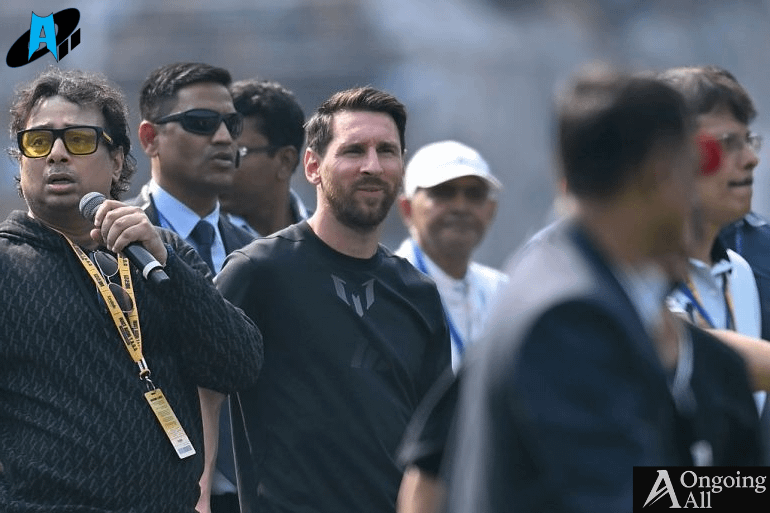
There are some names that do not need introduction. They travel faster than passports, reach places long before the person does, and carry emotions heavier than luggage. Lionel Messi is one such name. In India—a country where cricket is religion and football is often an underdog—Messi’s presence has never been about stadium appearances alone. It has been about screens flickering late at night, dusty fields echoing with his name, and a generation learning to believe that magic can be small, quiet, and left-footed.
This is not a blog about statistics or trophies. This is a story about how Messi arrived in India long before he ever did physically—and why his connection with the country feels deeply personal to millions.
A Distant Star, A Close Feeling
For many Indian football fans, Messi first appeared not as a player, but as a rumour. A whisper passed between school benches, cyber cafés, and neighborhood football grounds: “There’s a boy in Barcelona who plays like no one else.” In the early 2000s, access to European football was limited. Matches were watched on fuzzy television signals or replayed endlessly on pirated CDs. Yet even through poor resolution, something was unmistakable.
Messi didn’t look like a hero carved from stone. He was small. Quiet. Almost fragile. In a country where young athletes are often told they don’t fit the “ideal” physical mold, this mattered. Messi didn’t dominate by force; he persuaded with skill. He didn’t shout; he whispered through his feet.
In India, that whisper grew loud.
India’s Late-Night Love Affair
If cricket matches were family events, Messi matches were secret rituals. Teenagers stayed awake past midnight, volume turned low, parents asleep. Alarm clocks were set not for school, but for kickoff. Cable TV schedules were memorized. When internet streaming arrived, buffering became the price of devotion.
The Champions League nights, El Clásico showdowns, and World Cup qualifiers were more than entertainment. They were shared experiences across cities and villages. From Kolkata to Kochi, from Delhi to Dibrugarh, a common language emerged—one that didn’t need translation.
In tea stalls and college canteens, debates raged: Messi or Ronaldo? But even within rivalry, respect remained. Messi fans in India often described him not as the loudest star, but as the most human one.
When Messi’s Story Felt Like Ours
Part of Messi’s deep resonance in India comes from his journey itself. A boy who left home early. A family that took risks. Medical challenges. Doubt from the outside world. And an unwavering commitment to craft.
India understands struggle. It understands delayed recognition. It understands talent that survives not because of systems, but despite their absence. Messi’s story mirrored the dreams of countless young Indians playing barefoot football in school fields, railway colonies, and narrow lanes.
You didn’t have to be from Argentina to feel connected. You just had to believe that greatness could come from unlikely places.
The Blue and White Summer
The 2014 FIFA World Cup was a turning point for Indian Messi fandom. Argentina’s run to the final turned homes into temporary Argentine embassies. Flags appeared on balconies. Jerseys sold out in local markets. Even those who rarely watched football found themselves drawn into the drama.
Though the final ended in heartbreak, something irreversible happened. Messi was no longer just a club legend. He was a global protagonist. In India, he became a symbol of grace under pressure—of carrying a nation’s expectations silently.
Years later, the 2022 World Cup would complete the arc. When Messi finally lifted the trophy, Indian streets erupted as if it were a local victory. Firecrackers lit the sky. Social media timelines flooded with tears, tributes, and gratitude. For many fans, it felt like closure—not just for Messi, but for themselves.
Messi Beyond the Screen
Messi’s presence in India hasn’t been limited to televised moments. His influence shows up in everyday life. In the way children copy his dribbling style. In the way young players choose the number 10 jersey. In the way coaches reference his discipline rather than just his goals.
Football academies across India often use Messi’s clips to teach balance, control, and vision. Not power. Not aggression. Precision. Intelligence. Patience.
Even brands recognized this quiet influence. Advertisements featuring Messi resonated strongly with Indian audiences—not because of glamour, but because of credibility. He felt real. Earned.
The Rare Visits and the Endless Wait
Whenever news surfaced about Messi potentially visiting India, it spread like wildfire. Headlines multiplied. Fans speculated. Social media counted days before anything was confirmed. The idea of Messi walking on Indian soil carried emotional weight far beyond a celebrity visit.
Because for Indian fans, seeing Messi wasn’t about selfies or signatures. It was about validation. About being seen by the game they had loved so loyally from afar.
Even without frequent physical presence, Messi’s relationship with India remained strong. Perhaps because true connection doesn’t always require proximity.
Cricket Country, Football Heart
India is often labeled a cricket-first nation, and rightly so. But Messi’s popularity revealed something deeper: India is a sports-loving country that embraces excellence wherever it appears. When talent is honest and effort is visible, Indians respond.
Messi never tried to market himself aggressively. He never chased attention. And yet, he found a home in the hearts of millions. In a way, his rise in India was organic—built on late nights, shared screens, and emotional investment.
He didn’t replace cricket. He simply expanded the country’s sporting imagination.
A Legacy That Outlives Matches
Today, when young Indian footballers talk about inspiration, Messi’s name comes up as often as any local hero. Not because they expect to become him, but because he redefined what was possible.
He showed that leadership doesn’t always look loud. That consistency can be more powerful than spectacle. That humility can coexist with greatness.
For India—a nation constantly negotiating between tradition and aspiration—these lessons matter.
The Story Continues
Messi’s journey in Indian hearts is far from over. It continues in the next generation, who may watch him not live, but in highlights and documentaries. It continues in conversations between parents and children. It continues every time a small boy or girl believes that skill matters more than size.
Messi may belong to Argentina by birth and Barcelona by history, but in spirit, he belongs everywhere football is loved sincerely. In India, that love has been patient, passionate, and profound.
And long after the final whistle of his career blows, one thing is certain: somewhere in India, a television will glow at midnight, a ball will roll across a dusty field, and a name will still be whispered with awe—Messi.
Because some legends don’t just visit countries. They live in them.