Introduction: Why a Single Penguin Captured the Internet
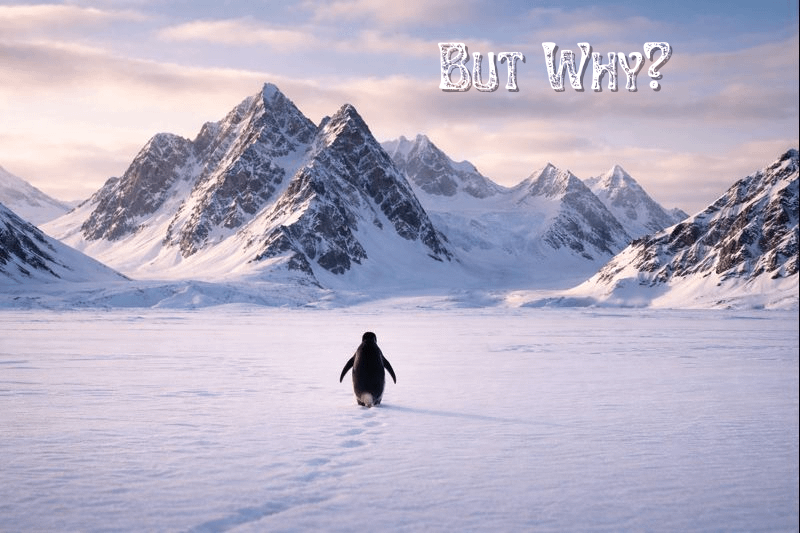
A short viral penguin video showing a lone penguin waddling away from its colony and seemingly heading toward distant mountains has captured global attention. Shared widely across social platforms, the clip sparked curiosity, humor, and heartfelt discussion. Viewers wondered whether the penguin was lost, exploring, or making a symbolic journey away from the group. The scene felt cinematic, even poetic, and many people paused their scrolling to watch it again.
What makes this moment so compelling is not just the animal itself, but how humans interpret it. A penguin walking alone across the icy landscape challenges our expectations. Penguins are known for social behavior and tightly knit colonies, so seeing one move in a different direction naturally invites questions. This article explores the penguin walking toward mountains moment from multiple angles—where the clip came from, what science can and cannot explain, and how the internet responded—while keeping the discussion responsible, factual, and respectful of wildlife.
Origin of the Viral Penguin Clip
The widely shared clip is often described as a penguin documentary clip, originally filmed as part of a nature documentary project focused on life in Antarctica. While many social media posts removed context, the footage itself is authentic and comes from professional wildlife filming rather than staged content.
Importantly, the moment is usually a short excerpt taken out of a much longer observation sequence. Nature documentaries frequently capture unusual or visually striking behavior, but these moments are not always representative of long-term outcomes. Without revealing spoilers or specific narrative details, it is enough to say that the clip was intended to show the unpredictability of wildlife rather than to suggest danger or distress.
As with many nature documentary moments, once the footage reached the internet, it took on a life of its own—detached from its original educational framing and reshaped by audience interpretation.
Why Penguins Normally Travel in Groups
To understand why this video felt unusual, it helps to know some basic Antarctica penguin facts. Most penguin species are highly social animals. They live, breed, and travel in groups for several practical reasons:
- Safety in numbers: Group movement reduces individual risk from environmental challenges.
- Navigation: Penguins often follow established paths between the ocean and breeding grounds.
- Thermal efficiency: In extreme cold, proximity helps conserve warmth.
Because of these traits, viewers quickly labeled the scene as unusual penguin behavior. The idea of a penguin heading off alone, especially toward mountains rather than the sea, seemed to contradict what many people believe about penguin life.
However, “normally” does not mean “always.” Wildlife behavior includes variation, exploration, and moments that fall outside the most common patterns.
Possible Scientific Explanations (Without Speculation)
When people ask why is the penguin walking away or assume the penguin is going the wrong direction, scientists urge caution. Responsible wildlife interpretation avoids jumping to conclusions based on limited footage.
Here are some carefully framed possibilities that researchers often discuss when explaining penguin behavior explained in general terms:
1. Temporary Disorientation
In vast, visually uniform environments like Antarctica, even experienced animals can momentarily move away from typical routes. This does not automatically indicate a problem or long-term outcome.
2. Exploratory Movement
Animals sometimes explore their surroundings. Short-distance movement away from a group can be part of natural behavior, especially outside peak breeding or feeding periods.
3. Filming Perspective
Camera angles and framing can exaggerate distance or direction. A penguin that appears to be heading toward mountains may simply be moving across terrain that aligns visually with the background.
4. Incomplete Context
A few seconds of video cannot show what happened before or after. Wildlife experts consistently emphasize that interpretation should be limited to what can be confirmed.
These explanations are not diagnoses or definitive answers. They reflect how scientists approach wildlife behavior in Antarctica—with humility, evidence, and an awareness of observational limits.
How the Internet Reacted: Memes, Emotions, and Interpretations
The clip quickly became a centerpiece of viral animal videos internet culture. Social media users added captions, music, and personal interpretations. Some found humor in the penguin’s apparent independence, while others projected emotional narratives onto the scene.
Common reactions included:
- Jokes about “choosing a different life path”
- Comparisons to human moments of uncertainty
- Artistic edits emphasizing solitude or determination
This wave of creativity reflects how the internet reacts to penguin video content in general. Animals often become symbolic mirrors for human experience, especially when the footage is visually simple and emotionally open-ended.
While these reactions are usually lighthearted, it is important to remember that animals are not acting out human stories. The penguin is not making a statement—it is simply being a penguin.
Symbolism vs Reality: What People Think vs What Science Says
One reason the clip spread so widely is the strong sense of symbolism people attached to it. Discussions around penguin symbolism meaning framed the scene as representing independence, rebellion, curiosity, or even existential choice.
Symbolic interpretation is a natural human response to storytelling images. However, science operates differently. From a biological perspective:
- Animals do not act with symbolic intent
- Behavior is shaped by environment, instinct, and immediate conditions
- Human emotions cannot be reliably mapped onto wildlife actions
Understanding this difference helps viewers enjoy the metaphor while respecting reality. Appreciating the penguin as a symbol does not require believing that the symbol reflects the animal’s internal experience.
Why Viral Animal Videos Matter for Awareness
Despite the risks of misinterpretation, viral moments like this can have positive effects. A widely shared viral penguin video can introduce millions of people to Antarctic ecosystems who might not otherwise engage with wildlife content.
Benefits include:
- Increased curiosity about Antarctica penguin facts
- Greater interest in nature documentaries and conservation media
- Conversations about how animals actually live in extreme environments
When handled responsibly, these clips can act as gateways to learning. They remind audiences that the natural world is complex, surprising, and worth understanding beyond surface-level reactions.
Lessons About Nature, Curiosity, and Human Projection
The story of the penguin walking alone highlights how easily humans project meaning onto nature. Asking why penguins walk alone or assuming the penguin chose a “wrong” path reflects our own storytelling instincts more than biological reality.
Key takeaways include:
- Nature does not follow narrative arcs
- Curiosity should lead to learning, not assumptions
- Respecting wildlife means acknowledging what we do not know
By approaching such content thoughtfully, viewers can enjoy the emotional impact without spreading misinformation or unnecessary concern.
Conclusion: Enjoying Internet Culture While Respecting Wildlife
The image of a penguin walking toward the mountains is memorable because it sits at the intersection of nature and human imagination. As a piece of viral content, it succeeded in capturing attention and sparking discussion. As a moment of wildlife footage, it deserves careful, respectful interpretation.
Enjoying nature documentary moments online does not require dramatic conclusions or emotional projections. Sometimes, the most responsible response is simple curiosity—paired with an understanding that animals live complex lives beyond the frame of a video.
By sharing and discussing wildlife content thoughtfully, we can celebrate both the beauty of nature and the creativity of internet culture, without losing sight of scientific perspective.
Frequently Asked Questions (FAQ)
Why did the penguin walk away from the group?
Short clips do not provide enough context to determine intent. Temporary separation can occur naturally and does not necessarily indicate a problem.
Is walking toward the mountains dangerous for penguins?
Penguins navigate challenging environments regularly. Direction alone does not indicate risk without additional context.
Was the penguin really going the wrong direction?
What appears to be the “wrong direction” may be a matter of camera angle or limited footage rather than actual navigation error.
Why do people feel emotional about animal videos like this?
Humans naturally project emotions onto animals, especially in visually striking or ambiguous scenes.
Do viral animal videos help conservation?
When shared responsibly, they can raise awareness and interest in wildlife and environmental education.